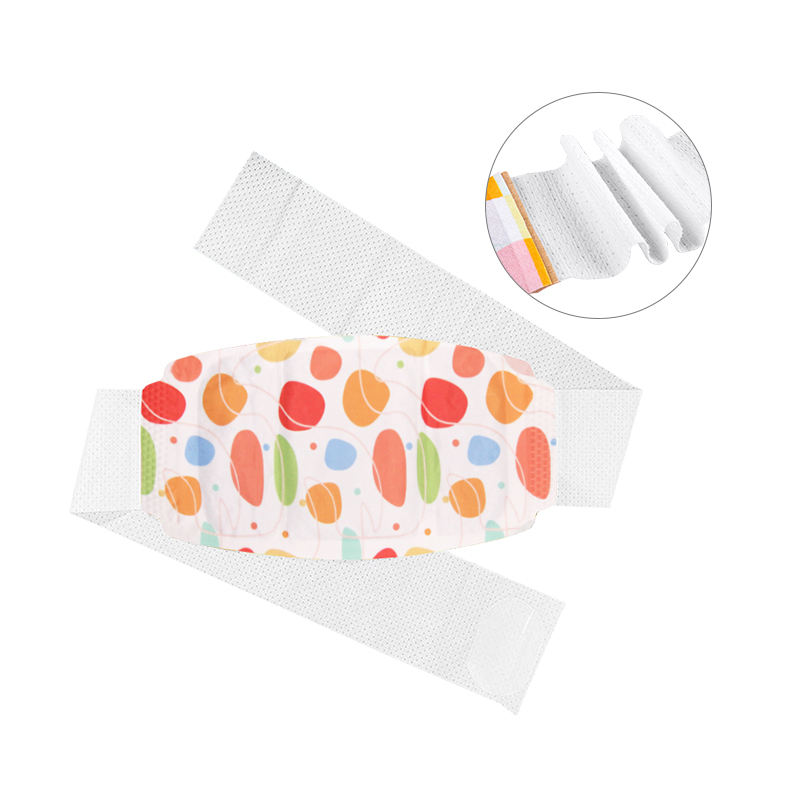
-
 KONGDY
What QC Tests Should a Waist Heat Patches Manufacturer Perform?
When evaluating a Waist Heat Patches Manufacturer, one factor stands above all — quality control (QC). Unlike ordinary consumer goods, waist heat patches involve direct skin contact and controlled chemical heat release. Any misalignment in formula percentage, raw material purity, adhesive sensitivity, or temperature stability can result in burns, skin irritation, or failure to heat at all.
Therefore, a reliable Waist Heat Patches OEM must implement rigorous QC testing at every stage of production — from raw materials to final packaging. Only through structured testing can Custom Waist Heat Patches maintain safety, consistency, heating performance, and user comfort.
This article provides a detailed, SEO-optimized breakdown of the critical QC tests that every Waist Heat Patches Supplier must conduct, explaining why each matters and how they ensure safe, stable products suitable for global distribution and private-label branding.
1. Raw Material Quality Testing — The Foundation of Safety & Performance
Before production begins, all ingredients and materials must pass strict incoming inspections. The raw material stage defines the heating level, duration, skin tolerance, and overall patch effect.
Key raw-material QC tests include:
✔ Iron powder purity test
Ensures predictable oxidation, stable heating, and no combustion spikes.
✔ Activated carbon & mineral content analysis
Guarantees strong catalytic performance and smooth heat output.
✔ Moisture content measurement
Prevents premature reaction during storage or transit.
✔ Adhesive sensitivity and hypoallergenic testing
Reduces irritation for sensitive skin users.
✔ Non-woven fabric breathability and tensile strength test
Determines comfort, durability, and heat distribution capability.
A Waist Heat Patches OEM with laboratory-grade raw-material testing ensures every formula batch is safe, consistent, and globally compliant.
2. Formula Composition & Ratio Verification
The heat patch's chemical mixture controls temperature intensity, duration, and safety. Even a small deviation can drastically change the heating curve.
Critical tests include:
Iron powder proportion stability
Activated carbon/vermiculite ratio calibration
Water content consistency control
Sodium chloride distribution uniformity
These QC tests allow Custom Waist Heat Patches to maintain predictable performance whether heating for 8, 12, or even 20 hours. Strong ratio control also enables the creation of segmented products such as:
? Menstrual soothing patches
? Sports muscle recovery patches
? Long-duration arthritis relief patches
Customization is only valuable when scientifically controlled.
3. Heating Curve & Temperature Stability Testing
Heating performance is the core value of the product. A trustworthy Waist Heat Patches Supplier must run precision temperature curve tests on every batch.
Key heating QC indicators:
| Test | Why it matters |
|---|---|
| Maximum temperature test | Prevents overheating & skin burn risk |
| Average operating temperature | Ensures comfort instead of sharp heat |
| Heating duration verification | Confirms label claims (8h/10h/12h+) |
| Temperature rise time test | Ensures quick but safe activation |
Any patch placed on a user’s skin must heat enough to relieve pain — but never exceed safe limits. This is one of the most critical QC checkpoints in OEM manufacturing.
4. Adhesive Performance & Skin Compatibility Testing
Adhesive quality determines whether a heat patch sticks securely yet gently. Poor adhesive = product failure, regardless of heat quality.
Adhesive QC tests include:
✔ Peel strength testing
✔ Re-adhesion capability test
✔ Skin sensitivity & irritation analysis
✔ Wear-duration reliability test
✔ Sweat resistance simulation
These tests ensure the patch stays in place during movement, work, or outdoor use. For Private Label Waist Heat Patches, this directly influences user satisfaction and brand reputation.
5. Breathability & Material Comfort Assessment
Waist patches are often worn for 8+ hours. Without proper comfort testing, patches can trap heat, cause sweating, or damage skin.
Key material QC evaluations include:
Fabric ventilation & porosity test
Inner layer friction & rub-resistance test
Edge softness assessment
Pressure uniformity test during bonding
Comfort determines whether customers repurchase. A good Waist Heat Patches Manufacturer engineers not just heat — but long-wear satisfaction.
6. Safety & Toxicology Testing for Custom Waist Heat Patches
Especially when products include herbs or warming oils, safety validation becomes mandatory.
Required toxicology assessments:
✔ Skin irritation patch test
✔ Sensitization and allergy screening
✔ Extractable chemicals analysis
✔ Compound volatility & evaporation study
✔ Heavy metal & harmful substance detection
Customers assume their patch is safe. QC testing ensures that assumption is never betrayed.
7. Packaging Integrity & Shelf-Life Stability Tests
A heat patch must remain inactive until opened. If packaging fails, moisture enters and triggers early oxidation.
Packaging QC procedures include:
| Test | Purpose |
|---|---|
| Airtight sealing strength test | Prevents premature heating |
| Oxygen barrier test | Ensures long storage life |
| Mechanical stress & transport durability | Avoids leaks or tears in transit |
| Shelf-life simulation test | Confirms long-term performance stability |
A professional Waist Heat Patches OEM tests packaging as seriously as the patch itself.
8. Batch-to-Batch Consistency Testing
Even perfect samples mean nothing if mass production lacks consistency.
A reliable Waist Heat Patches Supplier performs:
✔ Random sample heating tests per batch
✔ Statistical temperature uniformity analysis
✔ Defect rate evaluation & rejection policy
✔ Production traceability documentation
Consistency is where QC transforms from testing to quality assurance.
9. Regulatory Compliance & Certification-Based Testing
For products entering EU/US/Japan markets, compliance QC is essential.
Manufacturers should provide:
? MSDS chemical safety reports
? CE/FDA/ISO production certification
? ROHS/REACH substance compliance
? Full documentation for customs clearance
This ensures Custom Waist Heat Patches can legally and safely sell worldwide.
Conclusion
Quality is not an outcome — it is a process.
A strong Waist Heat Patches Manufacturer performs comprehensive QC tests across raw materials, formula composition, heating curves, adhesive sensitivity, safety toxicology, and packaging integrity. For brands investing in Private Label Waist Heat Patches, these tests are fundamental to ensuring that every product delivered to consumers is safe, comfortable, consistent, and effective.
A trusted Waist Heat Patches OEM doesn't just produce — it verifies, certifies, and protects your brand.
If you want a product line that sells long-term rather than one that simply ships, choose a supplier whose QC system is proactive, documented, and scientifically built.
Related Questions & Short Answers
| Question | Answer |
|---|---|
| What QC tests are most important for heat patches? | Temperature stability, ingredient ratio, adhesive sensitivity, and toxicology. |
| Why does formula ratio matter? | Small variations can cause overheating, under-heating, or irritation. |
| How does QC benefit Private Label Waist Heat Patches? | It protects brand credibility and reduces return risk. |
| Should different markets require different QC? | Yes — export markets require CE/FDA/ISO compliance reports. |
| What proves a supplier is reliable? | Independent lab test data, traceability, certificates, and batch-consistency testing. |


