
-
 KONGDY
Three Ways the Letter Reaches You: Comparing Inspection, Online Review and Records Request for a Nose Strip OEM in 2026
Three Ways the Letter Reaches You: Comparing Inspection, Online Review and Records Request for a Nose Strip OEM in 2026

This library now holds nine warning letters, and reading them together produces a finding that reading them one at a time does not: there are three different routes by which the agency reaches a firm, and they are not variations of one process.
The first route is the familiar one. Investigators visit, observe, and issue a Form FDA 483. The second reads the published material of a company and, in one case, buys its products. The third asks a company for its records in writing and reaches a conclusion about a quality system from what comes back.
The routes differ in almost every respect that a manufacturer cares about. They start from different places, they need different evidence, they produce different findings, and they run on visibly different clocks.
For a nose strip OEM the comparison matters for one reason above the others. Two of the three routes can reach a firm that has a good factory, and one of them can reach a firm that has never been inspected, never been asked for a document, and has no idea that anything is outstanding. A nose strip OEM that has planned only for an inspection has planned for the one route it can see coming.
1. The starting point of each route
The first grid is the one that matters most, because it decides whether a firm can be reached at all.
| Route | What starts it | What the agency needs first | Which letters |
|---|---|---|---|
| Site inspection | A decision to inspect, following a complaint, a surveillance history, or a sampling plan | A facility with an inspection window, and access to it | 320-26-12, 724506, 320-26-99, 320-26-105, 726976 |
| Online review | A review of a website, a storefront, or a labelling, sometimes with the product bought | Published material, or a purchase | 735346, 736006, 718720 |
| Records request | A request under section 704(a)(4) of the Federal Food, Drug, and Cosmetic Act for records and other information | Nothing. It is a letter, and it works on a firm it has never visited | 707956 |
The third row is the one that changes the population a firm has to think about. A records request has no precondition, which means the set of firms that can be reached is every registered firm rather than the subset that draws an inspector.
For a nose strip OEM this is the practical point of the whole comparison. A firm can be perfectly well prepared for an inspection and still be the subject of a letter that arrives without warning.
2. The clock, measured from the dates in the public record
The second grid is the arithmetic, and every figure in it is computed from the dates recorded in the letters rather than estimated.
| Route | Cases | Shortest | Median | Longest |
|---|---|---|---|---|
| Site inspection | 5 | 163 days | 189 days | 197 days |
| Online review | 3 | 92 days | 92 days | 211 days |
| Records request | 1 | 341 days | 341 days | 341 days |
The inspection row is the striking one, and it is the opposite of what a summary of this data would suggest. Five cases, a spread of 34 days, and a median of 189. An inspection case is a highly predictable event.
The online review row is the opposite: three cases spanning 119 days, from 92 days to 211. A review case is the least predictable of the three, and the reason is visible in the case that took 211 days, where the review was of a labelling in April 2025 and the letter was in November of the same year.
The records request row is a single case and is stated as one. The figure of 341 days is that case, and a single case should not be read as an average. What it does establish is that the longest route in this library is also the one with the lowest threshold.
For a nose strip OEM the practical reading is that an inspection is something a firm can plan for, a review is something a firm cannot, and a records request is something a firm has to have been ready for without knowing. A nose strip OEM that has planned for all three is insured against the two it cannot predict, and a nose strip OEM that has planned for one is not.

3. The evidence each route can reach
The third grid compares what each route can actually establish, which is a more useful comparison than the clock because it determines what a firm has to hold.
| Route | What it can prove | What it cannot reach |
|---|---|---|
| Site inspection | Physical conditions, construction, equipment, records, and what people say in the room | Whether a batch was released correctly, unless samples are taken |
| Online review | What the labelling and the published copy say, and whether the claims fit the framework | Anything about the manufacturing process, because nothing is observed |
| Records request | Whether a quality system produced records at all, and what those records contain | Anything that would only be visible on site, including whether a procedure was followed in practice |
The second row is the most restrictive in a way that is easy to miss. An online review reaches claims and never reaches manufacturing, which means a firm with a perfectly run factory and a badly worded listing can be found, and a firm with a dreadful factory and a perfectly worded listing cannot be found that way at all.
The third row is the most severe. A records request establishes the existence of records and their content, and nothing else, which is exactly why the case in this library that used that route produced a finding that no inspector had observed and could not have.

4. The findings each route produces
The fourth grid is the one a buyer should read, because it shows what a supplier is likely to have been asked about depending on which route reached it.
| Route | The findings it produced in this library | The nature of the failure |
|---|---|---|
| Site inspection | 211.42(b) and (c) on space and defined areas; 211.67(a) and (b) on cleaning; 211.100(a) on process validation; 211.22 on the quality unit; 211.84(d)(1) and (d)(2) on components; 211.165(a) and (b) on release testing; 211.137(a) on stability | Conditions that were observable on the day and were not in order |
| Online review | Claims outside the permitted indications; ingredients not permitted under the monograph; a product found to be an unapproved new drug on the strength of its labelling | Wording, and what the wording implies about the formulation |
| Records request | A finding that the firm could not produce any records demonstrating that it tested its finished products before release, and that it did not appear to be performing release testing on finished products at all | The absence of evidence for a system that was said to exist |
The third row is the one worth sitting with, because the failure it produced is not a quality failure in the ordinary sense. Nothing was observed to be wrong. The finding was that the evidence that the system worked could not be produced, which is a different and in some ways a worse thing.
For a nose strip OEM that distinction decides what to prepare for. An inspection and a review both punish something that was done. A records request punishes the inability to show what was done, and that is the one a manufacturer can prevent almost entirely. A nose strip OEM that reads the three rows and prepares for the third one has done the cheapest of the three and the one with the longest clock.

5. What each route leaves behind
The fifth grid compares the residue each route leaves in the public record, which is what a buyer can and cannot learn from it.
| Route | What the public record shows | What it does not show |
|---|---|---|
| Site inspection | The firm, the issuing office, the clauses, and often a facility identifier | Whether the firm answered the 483, or what it said |
| Online review | The product, the brand, the claim and the framework it failed against | Which firm made it, unless the firm is named in the letter |
| Records request | The firm, the clauses, and the date the request was sent | What the firm produced in response, which is not published |
The second row is the one with a direct commercial consequence. Two of the three online review cases in this library are addressed to a platform rather than to a manufacturer, so a supplier searching the register for its own name finds nothing even when its own product is named in the letter.
The third row is the one that makes a records request difficult to learn from in advance. The agency published that it asked and published what it concluded. What sits between those two points is the exchange itself, and that is the part where the information usually is.
A nose strip OEM should therefore read a warning letter as the beginning of a record rather than the whole of it, and should ask for the correspondence where a relationship is being assessed.

6. Which route should a manufacturer expect?
The sixth grid is the one a supplier asks for, and the honest answer is that the route follows the product and the route to market rather than the quality system.
| If the product is | The route most likely to reach it | Because |
|---|---|---|
| Sold into the United States as an over-the-counter drug | Online review, and inspection | The labelling is public and purchasable, and a registered facility is inspectable |
| Sold into the United States as a device | Inspection, and online review | The same public material applies and the same facility list applies |
| Sold on marketplaces with a distributor-written listing | Online review | The published listing is the labelling, and it is where the finding is made |
| Sold with claims that reach beyond the framework | Online review | A claim can be read without a laboratory and without a visit |
| A firm with a quality system that cannot produce its own records | Records request | Nothing else is needed to find it, and the finding follows from the absence |
The fifth row is the one to note, and it is the least obvious. The route a firm ends up on is partly determined by what its records look like, because a records request is the cheapest route for the agency and the easiest to justify when the response is thin.
For a nose strip OEM the practical conclusion is that the choice is not entirely in the agency hands, and that the part a firm controls is the part that decides which route reaches it.

7. What to do with the comparison
Five steps, and each one belongs to a route rather than to a general programme.
- For the inspection case. Confirm that the facility can be shown, that the areas are defined, and that the records a 483 would ask for exist in the place where the 483 will be answered.
- For the online review case. Read your own published material as a consumer reads it, including every listing and every social account, and check each claim against the framework.
- For the records request case. Ask your own laboratory for a record you have never been asked for, and produce it the same day.
- For the claims case. Check every ingredient against the permitted list, and check the combination as well as each ingredient separately.
- For all three. Make sure the person who would answer is findable, because a records request is a letter and a letter is answered by a person.
The third step is the one that would have prevented the case this comparison is built on, and it costs an afternoon. The last step is the one that determines whether the answer arrives in time.
A nose strip OEM that has prepared for all three has covered the three routes, which is the point of comparing them. A nose strip OEM that has prepared for the route it expects has covered one of them, and the two it has not expected are the ones that do not arrive with a warning. A nose strip OEM that has read all three sections of this comparison has at least seen the shape of the problem, which is more than most suppliers have.

8. The four cases the comparison rests on
A comparison built on nine cases is worth stating exactly which cases it uses, because the strength of the intervals depends on which route each case belongs to.
| Route | Cases | Intervals | What the set can and cannot support |
|---|---|---|---|
| Site inspection | 320-26-12, 724506, 320-26-99, 320-26-105, 726976 | 163, 175, 189, 195 and 197 days | It supports a tight range for this route and a median. Five cases is a small set and the range may widen |
| Online review | 735346, 736006, 718720 | 92, 92 and 211 days | It supports the observation that the route varies widely, and the 92 days belong to two cases that shared a July review date |
| Records request | 707956 | 341 days | It supports a single case figure and nothing else. No distribution can be stated from one case |
The second row of the third column is worth stating because it is the honest limit of the online review figure. Two of the three online review cases share a review month and a letter date, so the 92 days is really one observation recorded twice rather than two independent measurements, and the 211 days is the only case that shows the route taking longer.
The inspection row is the one that carries the comparison, because five cases with a spread of 34 days is a genuinely tight cluster rather than a coincidence. A nose strip OEM should treat that cluster as a strong signal about that route and the other two rows as weaker signals, and should size its preparation accordingly.
One further note on the dates themselves. The start dates are the dates recorded in the letters, and they are not always equally precise. The two July 2026 online review cases record a month rather than a day, so their 92-day figure carries an uncertainty of up to a few weeks that the inspection figures do not. A nose strip OEM quoting any of these intervals should say so, and should quote the inspection range where precision matters.
There is a second limit worth recording, and it is the more important one. These nine letters are the letters this library has chosen to read, not a sample of all the letters issued, and the choice was not random. The cases in this library are the ones where the facts were rich enough to teach something, which is a selection effect that a reader should hold in mind.
What survives that objection is the comparison itself, because the three routes differ on grounds that do not depend on which letters happened to be selected. A records request works without a visit and produces findings about absence. An online review reaches published claims and never reaches manufacturing. An inspection observes conditions and can reach both. Those are properties of the instruments rather than properties of the cases, and a nose strip OEM can rely on them where it cannot rely on a median computed from five letters.
A nose strip OEM that prepares against the instruments rather than against the intervals has done the part that does not depend on how many letters happened to be read.
About KONGDY Medical

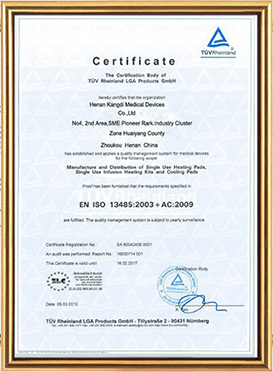
Henan Kongdy Medical Devices Co., LTD. (KONGDY) was founded in 1989 and has 37 years of production experience as of 2026 across pain relief patches, slimming patches, capsicum plasters, heat patches, cooling gel patches, detox foot patches, steam eye masks, mosquito repellent patches and nose strips. Headquartered in Henan, China, KONGDY operates a 100,000-class GMP workshop built in 2008 and obtained ISO 13485 medical device Quality Management System European Standard Certification in 2014. The company runs OEM and ODM services for international brands across multiple regulatory pathways.
For a 2026 procurement evaluation the qualification team can supply the ISO 13485 certificate, GMP workshop audit reports, stability programme documentation, and reference customer case studies upon request via our contact page.

Frequently asked questions
What are the three routes?
Site inspection, in which investigators visit and issue a Form FDA 483; online review, in which the agency reads published material and in one case bought the product; and a records request under section 704(a)(4) of the FD&C Act, in which the agency asks for records and reaches its conclusion from the response.
Which route is fastest?
Online review, at 92 days in both cases where the review happened in July 2026. But the online review route is also the least predictable, ranging from 92 to 211 days, and the case that took 211 days involved a labelling reviewed in April 2025.
Which route is most predictable?
Site inspection. Five cases, all between 163 and 197 days, a spread of 34 days, with a median of 189. That is a much tighter range than the online review route and it is the one route a firm can plan a response for.
Which route is longest?
The records request, at 341 days in the single case in this library. That is one case and should not be read as an average, but the direction is consistent with the route having the lowest threshold to be used.
Can a firm with a good factory still be reached?
Yes, and two of the three routes can reach it. Online review reaches claims and published listings, and a records request reaches any registered firm. Only the inspection route depends on the agency choosing to visit.
What is the difference between the finding routes produce?
Inspection and review both punish something that was done: a condition that was not in order, or a claim that did not fit. A records request punishes the inability to show what was done. One case in this library produced a finding that the firm did not appear to be performing release testing on finished products at all, because no records could be produced, and no inspector had observed anything at the facility.
Which route should a supplier prepare for first?
The one whose clock runs longest, which is also the one whose threshold is lowest. A firm that can produce, within a day, the release determination and underlying data for a recent batch, the identity test for an incoming lot, and the signed approval, has answered the records request before it is sent, and has answered the other two routes as well.
Do the letters themselves say which route was used?
They do, and the wording differs. An inspection letter refers to what investigators observed during an inspection. A review letter refers to what was reviewed or purchased. A records request letter refers to the records the firm submitted in response to a request under section 704(a)(4). Reading which of the three a letter uses tells the reader how much of the firm the agency has seen.
Related Guides
Five further references from the KONGDY knowledge base:
- Pain Relief Patch OEM: six warning letters compared
- Heat Patch OEM: twelve record gates from material to release
- Frequently asked compliance questions
- KONGWY OEM and ODM manufacturing services
- Cooling Gel Patch OEM: four working days at the border


