-
 KONGDY
Can Private Label Waist Heat Patches Be Eco-Friendly?
As global wellness and personal care trends shift toward sustainability, more consumers are demanding pain relief solutions that are not only effective but also environmentally responsible. This raises a critical question for enterprises entering or scaling in this niche: Can Private Label Waist Heat Patches be eco-friendly? The answer is yes — if they are developed and manufactured with the right materials, sourcing, and production standards.
Today, many brands are working closely with a Waist Heat Patches Manufacturer or partnering through Waist Heat Patches OEM programs to create sustainable alternatives that align with eco-conscious values. Private label development no longer means compromising sustainability for affordability. Instead, through proper design, biodegradable materials, recyclable packaging, and certified production processes, Private Label Waist Heat Patches can successfully deliver both comfort and environmental responsibility.
This article provides an in-depth analysis covering how sustainability can be achieved in product design, which materials are suitable, how manufacturers contribute to eco-label development, and why eco-friendly private label products have powerful market value. For businesses searching for competitive differentiation, this guide offers clear direction and convincing insight.
1. Why Eco-Friendly Private Label Waist Heat Patches Are the Future
The global heat patch market is expanding rapidly as consumers increasingly choose non-pharmaceutical alternatives for pain management. With sustainability now a major purchasing determinant, eco-friendly pain relief products are outperforming conventional options in many regions.
Brands choosing to collaborate with a certified Waist Heat Patches Supplier gain multiple advantages:
✔ Stronger consumer trust & brand perception
Eco-friendly positioning boosts reputation, credibility, and brand loyalty — especially among young demographics.
✔ Better competitiveness in export markets
Europe, North America, and APAC markets favor sustainability-certified products. Eco packaging and natural ingredients increase approval likelihood.
✔ Higher pricing potential and profitability
Green products are seen as premium, allowing for higher pricing without consumer resistance.
✔ Alignment with global ESG compliance trends
Retailers, distributors, and investors increasingly prioritize environmentally responsible producers.
Clearly, sustainability is not only a responsibility — it is a business advantage. This is why many companies are now seeking Private Label Waist Heat Patches that deliver eco-friendly performance without compromising on functionality.
2. How Private Label Waist Heat Patches Can Be Eco-Friendly
To produce a sustainable heat patch, every aspect of the product — from ingredients to packaging — must be considered. A capable Waist Heat Patches OEM can guide brands through this process by suggesting proper formulations, testing materials, and optimizing packaging choices.
Here are the key areas where eco-friendly innovation is achievable:
2.1 Natural Ingredient Fillings Instead of Synthetic Chemicals
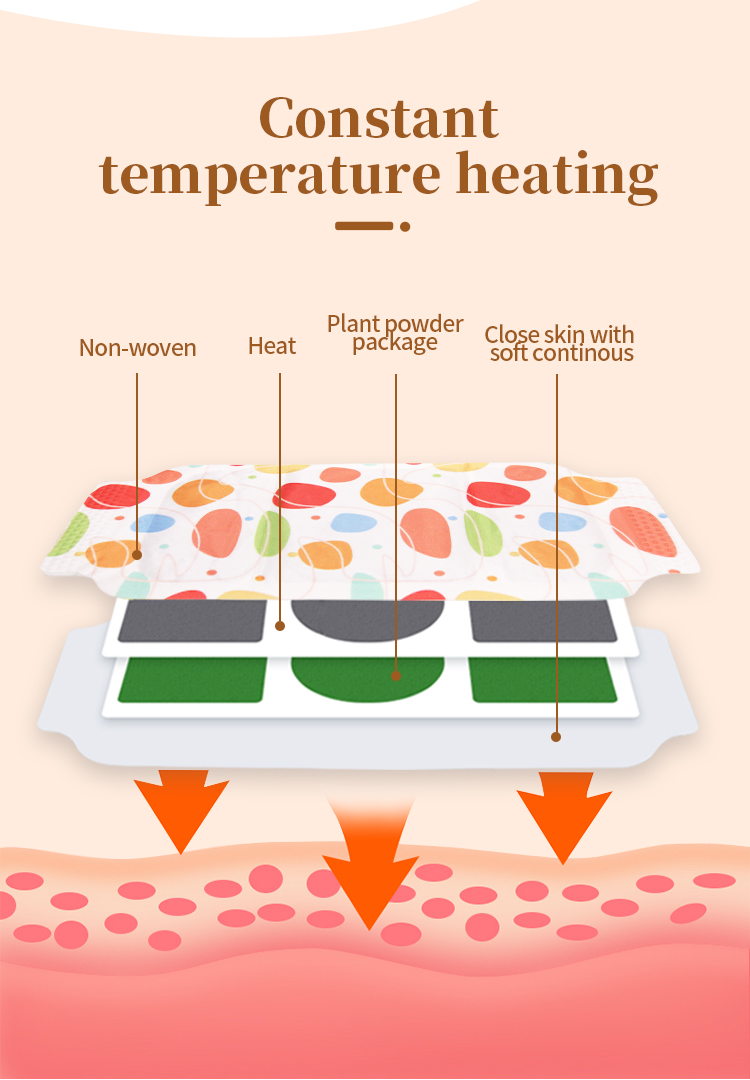
Traditional heating patches often rely on chemical compounds that create heat through oxidation. Eco-friendly alternatives use natural heat-generating elements such as:
| Sustainable Heat Source | Benefit |
|---|---|
| Iron powder | Natural oxidation, stable heat release |
| Activated carbon | Biodegradable and safe |
| Salt & water-based chemistry | Non-toxic and recyclable |
| Tourmaline or mineral heating elements | Long-lasting and reusable options |
Using natural materials enhances biodegradability and reduces skin irritation sensitivity. When produced responsibly, Custom Waist Heat Patches can provide safe, consistent warmth without harmful byproducts.
2.2 Biodegradable or Compostable Patch Materials
An eco-focused Waist Heat Patches Manufacturer can provide outer-layer materials that break down more easily in natural environments, including:
Plant-fiber nonwoven fabric
Bamboo or organic cotton layers
Corn-based biodegradable polymers
Recycled fibers or paper-based laminated materials
Biodegradable components ensure the patch leaves minimal environmental trace compared to synthetic plastic-based alternatives.
2.3 Skin-Safe Eco Adhesives and Breathable Materials
Eco-friendly heat patches should avoid petrochemical adhesives that can irritate skin and linger in the environment. Sustainable options include:
Medical-grade bioadhesive
Plant-based adhesive compounds
Hypoallergenic pressure-sensitive adhesive formulations
These solutions make Private Label Waist Heat Patches safe even for sensitive skin while improving sustainability.
2.4 Sustainable Packaging and Reduced Plastic Waste
Packaging is often one of the most polluting components. A green-focused Waist Heat Patches Supplier can provide:
| Packaging Type | Sustainability Benefit |
|---|---|
| FSC-certified paper boxes | Renewable forestry sources |
| Soy-based or water-based inks | Lower emissions vs. petroleum ink |
| Minimalist low-ink design | Reduced energy consumption |
| Recyclable aluminum or paper barrier layers | Reduces plastic dependency |
Even simple packaging changes can improve carbon footprint dramatically.
2.5 Production Certifications and Environmental Standards
A trustworthy Waist Heat Patches OEM should support eco-production through:
ISO 14001 Environmental Management
RoHS restriction of hazardous substances
GMP clean manufacturing
MSDS ingredient safety documentation
Recycling and waste-efficiency programs
These certifications prove environmental responsibility rather than merely claiming it — a major selling point for global buyers.
3. What Role Does a Waist Heat Patches Manufacturer Play in Sustainability?
The manufacturer’s ability and willingness to adopt eco-principles determines whether a private label product truly becomes sustainable. Their contribution includes:
• Raw Material Sourcing
The supplier chooses biodegradable, non-toxic, renewable ingredients.
• Production Methods
Factories must control emissions, manage waste, and use energy efficiently.
• Customization Support
A capable manufacturer can tailor eco-friendly materials, sizes, temperature duration, and comfort features.
• Certification Assistance
A good supplier helps brands secure CE, RoHS, FDA, MSDS, FSC packaging qualifications for export.
Therefore, choosing the right Waist Heat Patches Manufacturer makes sustainability achievable instead of theoretical.
4. Benefits for Brands Selling Eco-Friendly Private Label Waist Heat Patches
Businesses embracing sustainable patch development gain immediate value:
✔ Stronger marketing positioning
Eco-friendly claims are powerful in wellness marketing and SEO optimization.
✔ Higher retail acceptance
Pharmacies and medical chains prefer sustainable, compliance-ready products.
✔ Wider global export channels
Green products clear customs and quality audits more easily.
✔ Long-term business resilience
Reducing carbon footprint reduces regulatory risk and enhances future competitiveness.
Private label companies enter the market faster with a certified Waist Heat Patches OEM, while also building long-term brand equity.
5. Final Thoughts: Yes — Private Label Waist Heat Patches Can Be Eco-Friendly
Eco-friendly heat patches are not only possible — they are the future standard of the industry. With biodegradable substrates, natural heating compounds, recyclable packaging, and green manufacturing certifications, sustainability becomes a realistic commercial strategy rather than a conceptual ideal.
By collaborating with an experienced Waist Heat Patches Manufacturer and leveraging the flexibility of OEM production, brands can develop Custom Waist Heat Patches that are skin-safe, high quality, and environmentally responsible. Sustainability is now a business advantage, and early adopters will lead global market growth.
Whether positioned for household pain relief, menstrual warmth, athletic recovery, or everyday comfort — Private Label Waist Heat Patches that are eco-friendly represent a smarter, stronger, more future-proof product choice.
Related Questions & Quick Answers
| Question | Answer |
|---|---|
| Are private label heat patches suitable for eco-friendly positioning? | Yes, private label products can be designed using biodegradable fabrics, natural oxidants, and sustainable packaging. |
| What makes a Waist Heat Patches OEM eco-friendly? | Use of renewable materials, RoHS/ISO14001 compliance, waste reduction systems, and recyclable packaging. |
| Can Custom Waist Heat Patches have natural ingredients? | Absolutely — iron powder, carbon, salt, and natural adhesives are viable options. |
| Does eco-friendly production increase cost? | Costs may be slightly higher but consumers accept premium pricing for sustainability. |
| Which certifications prove eco compliance? | ISO 14001, RoHS, FDA registration, CE, MSDS, and FSC packaging certification. |


