-
 KONGDY
Are Custom Bamboo Foot Detox Patches Worth the Higher Cost?
In the competitive wellness market, pricing decisions are never just about cost—they are about value, positioning, and long-term brand strategy. Many brands sourcing from a Bamboo Foot Detox Patches Manufacturer ask a critical question:
Are Custom Bamboo Foot Detox Patches really worth the higher cost compared to OEM or private label options?
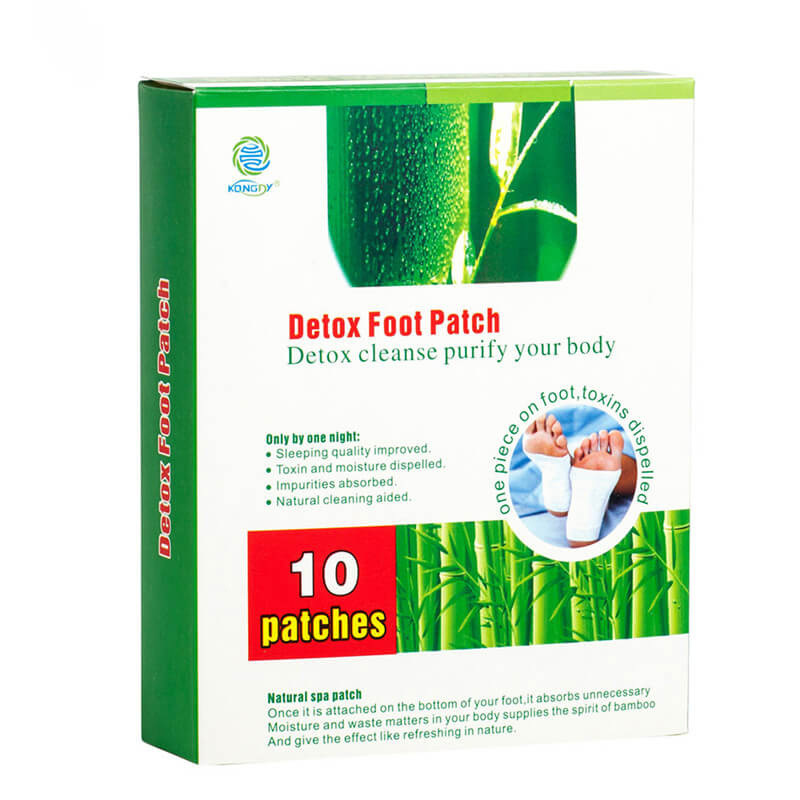
This article provides a clear, professional to help brands, startups, and distributors make informed decisions when choosing between Bamboo Foot Detox Patches OEM, Custom Bamboo Foot Detox Patches, and Private Label Bamboo Foot Detox Patches, while working with a reliable Bamboo Foot Detox Patches Supplier.
Understanding the Cost Difference: Custom vs. Standard Options
Before determining whether custom products are “worth it,” it’s important to understand why they cost more in the first place.
Bamboo Foot Detox Patches OEM (Standard)
Uses existing formulations and materials
Minimal development or testing
Lower MOQs and faster production
Lowest per-unit cost
Private Label Bamboo Foot Detox Patches
Standard product with brand-specific packaging
Limited flexibility in formulation
Moderate cost and fast market entry
Custom Bamboo Foot Detox Patches
Unique formulations, materials, or features
Dedicated R&D and testing
Customized packaging and branding
Higher MOQs and longer lead times
The higher cost of customization reflects additional labor, development, quality control, and production complexity handled by the Bamboo Foot Detox Patches Manufacturer.
Key Benefits That Justify the Higher Cost of Custom Bamboo Foot Detox Patches
1. Strong Brand Differentiation in a Crowded Market
The wellness category is saturated with similar-looking detox foot patches. Customization allows brands to stand out by offering:
Unique ingredient combinations
Distinct patch materials or sizes
Exclusive packaging designs
Clear brand identity
For brands aiming to build recognition and loyalty, Custom Bamboo Foot Detox Patches provide differentiation that standard OEM products simply cannot.
2. Higher Perceived Value and Premium Pricing Potential
Consumers often associate “custom” with “premium.”
By working closely with a Bamboo Foot Detox Patches Manufacturer on a custom project, brands can:
Position products as higher quality
Justify higher retail pricing
Improve gross margins despite higher production costs
In many cases, the price increase at retail outweighs the extra manufacturing cost, improving overall profitability.
3. Greater Control Over Ingredients and Quality
Custom production gives brands more control over:
Ingredient sourcing
Material safety
Sensory experience (smell, texture, adhesion)
Compliance with target market standards
This is particularly important for brands selling in regulated markets or emphasizing “natural,” “eco-friendly,” or “skin-safe” claims.
A reputable Bamboo Foot Detox Patches Supplier with GMP and quality certifications ensures that custom products meet consistent standards at scale.
4. Long-Term Brand Asset Building
Private label products are easy to replicate. Custom products are not.
Custom Bamboo Foot Detox Patches help brands:
Build proprietary product lines
Reduce direct price competition
Create long-term brand equity
Over time, this exclusivity becomes a strategic asset that supports distribution partnerships, repeat customers, and international expansion.
When Custom Bamboo Foot Detox Patches May NOT Be Worth the Cost
Despite their advantages, custom products are not always the best choice.
Custom may not be ideal if:
You are testing the market for the first time
Budget is extremely limited
Speed to market is critical
Brand differentiation is not a priority
In these cases, Private Label Bamboo Foot Detox Patches or standard Bamboo Foot Detox Patches OEM solutions offer lower risk and faster returns.
Cost vs. Value: A Practical Comparison
| Factor | Custom Bamboo Foot Detox Patches | Private Label Bamboo Foot Detox Patches |
|---|---|---|
| Unit Cost | Higher | Lower |
| Brand Differentiation | Strong | Limited |
| Profit Potential | High (long-term) | Moderate |
| Market Entry Speed | Slower | Faster |
| Replicability | Low | High |
| Strategic Value | Long-term | Short-term |
This comparison highlights that customization is an investment, not just an expense.
How the Right Manufacturer Reduces Customization Risk
Choosing the right Bamboo Foot Detox Patches Manufacturer plays a major role in determining whether customization pays off.
An experienced manufacturer can:
Optimize formulations to control cost
Suggest alternative materials without sacrificing quality
Offer scalable pricing as volumes grow
Reduce development errors and delays
A trusted Bamboo Foot Detox Patches Supplier turns customization from a risk into a competitive advantage.
Final Verdict: Are Custom Bamboo Foot Detox Patches Worth It?
Yes—Custom Bamboo Foot Detox Patches are worth the higher cost when:
Your brand targets mid-to-premium markets
Differentiation and brand identity matter
You plan for long-term growth
You work with a qualified, reliable manufacturer
For short-term or low-budget strategies, OEM or private label options may be more practical. But for brands focused on sustainable growth, premium positioning, and defensible market presence, customization delivers lasting value.
FAQs: Quick & Practical Answers
Q1: Why do Custom Bamboo Foot Detox Patches cost more?
They require unique formulations, additional testing, custom packaging, and more complex production processes.
Q2: Can custom products become cheaper over time?
Yes. As order volume increases, unit costs typically decrease due to economies of scale.
Q3: Are private label products less risky than custom ones?
Yes in the short term, but they offer less differentiation and long-term brand protection.
Q4: Should startups choose custom or OEM first?
Many startups begin with private label or OEM, then transition to custom once demand is validated.
Q5: How important is the Bamboo Foot Detox Patches Manufacturer in custom projects?
Extremely important. The manufacturer’s experience directly affects cost control, quality, and scalability.


