
-
 KONGDY
Are All Detox Foot Pads Made the Same Way? A Deep Dive into Ingredients, Manufacturing, and Market Differences
Analysis Featuring Detox Foot Pads Manufacturer, Detox Foot Pads OEM, Custom Detox Foot Pads, Private Label Detox Foot Pads, and Detox Foot Pads Supplier
Detox foot pads are a popular wellness product in the global market, often sold as Private Label Detox Foot Pads or developed as Custom Detox Foot Pads by a specialized Detox Foot Pads Manufacturer or through a Detox Foot Pads OEM partnership. Yet behind the seemingly uniform appearance of these patches lies a diverse landscape of manufacturing processes, formulations, and supplier capabilities.
This comprehensive article explores whether all detox foot pads are made the same way, comparing ingredient choices, production standards, quality variations, regulatory compliance, and the differences between generic products and customized or premium offerings from reputable Detox Foot Pads Suppliers. By understanding these factors, brands and consumers alike can make informed decisions in a crowded marketplace.
1. What Are Detox Foot Pads? A Quick Overview
Detox foot pads are adhesive patches that are applied to the soles of the feet — typically overnight — and are purported to:
Draw out toxins from the body
Support relaxation and better sleep
Improve circulation and well-being
While Detox Foot Pads Manufacturers and Detox Foot Pads Suppliers often market these products with health claims, there is no scientific evidence that foot pads remove bodily toxins through the feet; discoloration of used pads is most often due to moisture interacting with ingredients like wood or bamboo vinegar rather than actual “toxins” being extracted.
Despite the scientific controversy, detox foot pads remain a significant segment in wellness retail, with a range of styles, ingredient blends, and manufacturing techniques.
2. Common Base Ingredients: Similar or Completely Different?
At a glance, many detox foot pads share similar core components, but recipes can vary widely depending on supplier, market positioning, and intended effects.
a. Core Ingredients Found Across Many Pads
Common base ingredients often include:
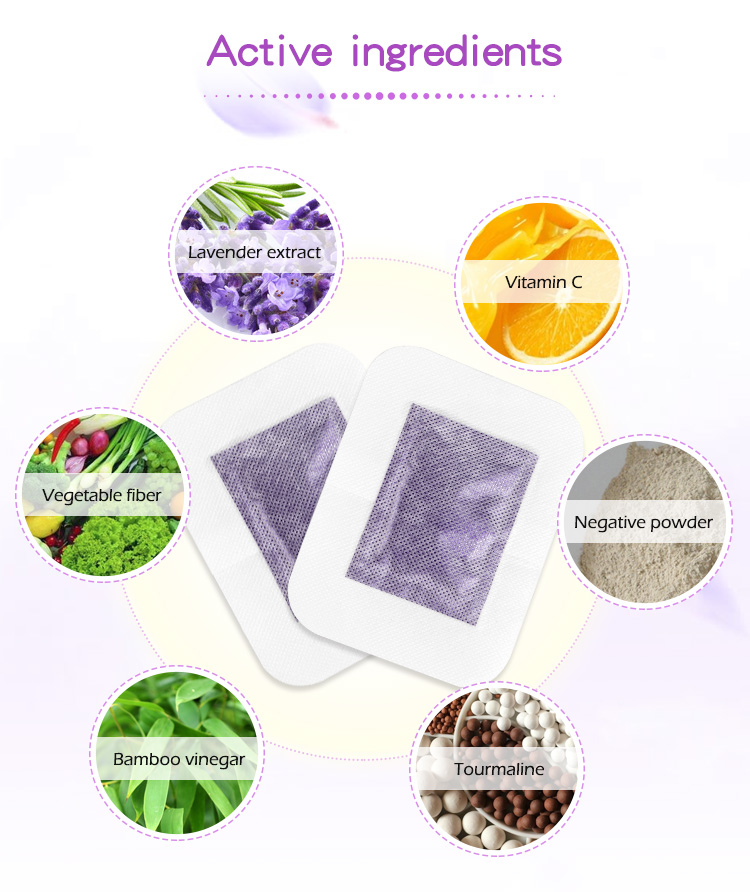
Wood vinegar or bamboo vinegar — a by-product of pyrolysis used for moisture absorption and color change.
Tourmaline or minerals — proposed to emit infrared or negative ions (scientific evidence limited).
Herbal extracts — such as eucalyptus or houttuynia cordata in some formulations.
Adhesive and non-woven backing materials — for comfort and secure application.
However, the specific percentages, quality of materials, and additional components can differ dramatically between manufacturers and suppliers.
b. Formulation Differences by Supplier
For example, some Detox Foot Pads Suppliers emphasize simple herbal mixes with green tea and bamboo vinegar, while others promote complex blends with ginseng and multiple botanical extracts.
These differences matter because:
Ingredient ratios affect how pads react with moisture
Supplemental herbs can change the sensory experience (e.g., scent or skin feel)
Certain additives may cause irritation in sensitive users
Thus, not all pads are created equal, and formulation varies significantly across products.
3. Manufacturing Methods: Do All Pads Use the Same Process?
No — manufacturing processes can vary widely depending on whether products are mass-produced, private label, custom-designed, or optimized through an OEM partner.
a. Generic Mass-Produced Pads
Many low-cost detox pads are made in high volume by suppliers who offer standard formulas with little customization. These products:
Use widely available ingredient mixes
Prioritize cost-efficiency over bespoke performance
Often lack advanced quality controls
While inexpensive, these pads may not meet consistent quality or safety standards that more reputable offerings maintain.
b. Private Label Detox Foot Pads
Brands that source Private Label Detox Foot Pads from experienced Detox Foot Pads Manufacturers benefit from:
Known base formulas that are ready for branding
Consistency in packaging and labeling
Faster time-to-market
However, private label products may still share similarities with competitors if sourced from the same supplier — even if marketed under different brand names.
c. Custom Detox Foot Pads and OEM Development
For brands seeking meaningful differentiation, partnering with a Detox Foot Pads OEM for custom product development offers several advantages. According to industry insights:
OEM services include formulation optimization, ingredient selection, and performance testing.
Brands can adjust herbal blends, ingredient ratios, and even physical properties like thickness or adhesion.
Sampling, stability testing, and compliance checks help ensure a higher-quality end product.
Custom manufacturing yields pads that can be tailored to specific markets, consumer preferences, or brand positioning — far more nuanced than generic alternatives.
4. Regulatory and Quality Differences
One of the most important distinctions between detox foot pads lies in manufacturing standards, quality controls, and regulatory compliance.
a. Certifications and Safety Controls
Some reputable Detox Foot Pads Manufacturers and Detox Foot Pads Suppliers operate under recognized quality systems such as:
GMP (Good Manufacturing Practices) compliance
ISO certifications (e.g., ISO 13485 for medical adhesive products)
Third-party testing for ingredient purity and safety
These certifications help ensure that products are consistent, safe, and properly labeled.
By contrast, unregulated manufacturers may use lower-grade raw materials and lack quality assurance testing, risking inconsistent product performance or potential skin irritation.
b. Labeling and Claims Compliance
Regulations around health claims vary by region. In some markets, making detoxification claims without scientific backing can lead to regulatory action — as seen in the U.S., where the FTC penalized foot pad marketers for unsupported health claims.
Reputable Detox Foot Pads Suppliers work with brands to ensure compliance with labeling standards and avoid deceptive claims.
5. Packaging and Consumer Experience Differences
Aside from ingredients and manufacturing, presentation and packaging also differentiate products:
Premium Private Label Detox Foot Pads often include aesthetically pleasing packaging and clear usage instructions
Custom formulations may come in unique sizes or shapes based on consumer preference
Some suppliers offer eco-friendly or sustainable packaging options
These elements affect consumer perception and perceived value, even if the underlying product technology remains similar.
6. Consequences of Manufacturing Variations for Consumers and Brands
The differences in formulation and manufacturing affect how products are perceived and perform:
a. Consumer Expectations vs. Reality
Many Detox Foot Pads Manufacturers market pads as detox solutions, but scientific evidence does not support claims of true detoxification through foot pads.
Consumers often equate:
Color change with toxin removal
Natural ingredients with proven health benefits
But these assumptions can be misleading.
b. Brand Reputation and Quality Assurance
Brands that invest in custom formulations, rigorous testing, and reputable supply chains are more likely to build trust and repeat customers.
A poorly formulated or low-quality product — even if marketed heavily — can damage a brand’s reputation and lead to negative reviews or returns.
7. Case Studies: Variations You Might Encounter
To ground this discussion, consider how different Detox Foot Pads Suppliers position their products:
a. Traditional Herbal Focus
Some suppliers emphasize bamboo vinegar and multiple botanicals in their formulations, claiming a more potent or authentic experience.
b. Simple Hygroscopic Formulas
Lower-cost detox foot pads often rely mainly on wood vinegar and adhesive pads without extensive herbal blends, focusing on affordability and mass production.
c. Premium Custom Pads via OEM Services
Brands working with a Detox Foot Pads OEM may specify:
Skin-friendly natural additives
Enhanced packaging
Specialized blends targeting wellness niches
This kind of customization differentiates products even if the base mechanism (adhesive + vinegar) remains similar.
8. Conclusion: Are All Detox Foot Pads Made the Same Way?
In short — no. While many detox foot pads share common foundational ingredients and basic adhesive structures, they vary significantly in:
Formulation complexity
Ingredient quality
Manufacturing standards
Regulatory compliance
Packaging and branding support
Products from experienced Detox Foot Pads Manufacturers and customized through Detox Foot Pads OEM services tend to offer greater consistency, better quality control, and branding flexibility compared to generic mass-produced pads.
Understanding these differences helps both brands and consumers make informed decisions in a crowded market where “detox foot pads” may appear uniform but are far from identical behind the scenes.
Frequently Asked Questions (FAQs)
Q1. Are all detox foot pads formulated the same way?
A: No. While they often share core ingredients, formulations vary widely by supplier and manufacturer.
Q2. Does choosing a Custom Detox Foot Pads OEM improve product quality?
A: Yes — OEM partnerships allow tailored blends, testing, and formulation optimization.
Q3. Do all Detox Foot Pads Suppliers follow quality standards?
A: No. Reputable suppliers often adhere to certifications, but some low-cost producers lack formal quality controls.
Q4. Do colors indicate toxin removal?
A: No scientific evidence supports that color change reflects toxins being extracted.
Q5. Should brands invest in Private Label Detox Foot Pads?
A: Private label offerings can provide a market entry point, but custom formulations often deliver more differentiation and perceived value.


